

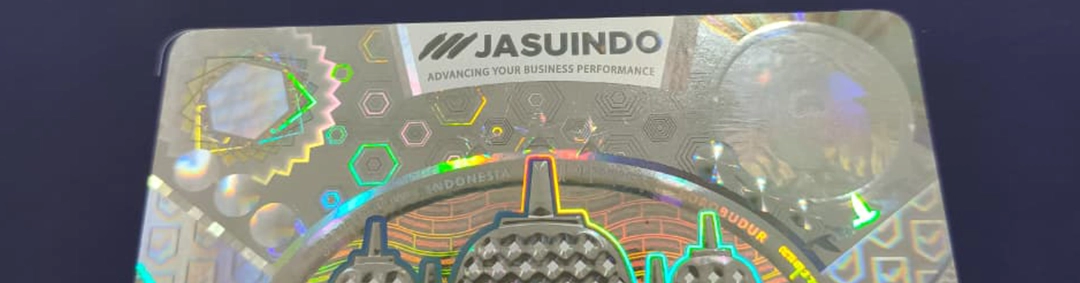
Hologram Security Technology for Product Protection
Hologram Security: Types, Security Technologies, and Their Development
In a world that is increasingly vulnerable to counterfeiting and product manipulation, security holograms remain one of the most effective security features for protecting valuable documents and goods. This technology not only provides visual appearances that are difficult to replicate, but also incorporates optical security layers that make it extremely challenging for counterfeiters to reproduce the patterns or visual effects. It is therefore unsurprising that holograms are widely used on identity cards, official documents, product packaging, and warranty seals.
This article discusses the types of holograms, the security technologies applied, and the factors that influence pricing, to help businesses consider the most appropriate security solutions.
What Is Hologram Security?
Technically, a hologram is a three-dimensional image created through light diffraction: when light interacts with specific optical patterns, it produces depth effects, microtext patterns, or complex visuals that are difficult to engineer. This is the reason why holograms serve as a strong security feature.
It is important to distinguish between decorative holograms (used solely for aesthetic purposes) and security holograms that incorporate optical features and additional security elements. Security holograms are typically produced using specialized mastering processes and require equipment that is not publicly accessible.
Types of Security Holograms
1. 2D/3D Holograms
These holograms display multiple visual layers that create a depth effect. They are the most common type and are widely used on product labels and identity cards.
2. Dot-Matrix Holograms
This type utilizes micro-patterns with extremely high resolution. The level of detail is difficult to replicate using standard equipment, making it suitable for brand protection and anti-counterfeiting seals.
3. Premium Holograms
A technology capable of creating patterns at the nano scale. This is the most exclusive category of holograms and provides the highest level of difficulty for counterfeiting by unauthorized parties.
4. True Color Holograms
These holograms display realistic colors and layered visuals with high accuracy. Due to their optical complexity, this type is rarely replicated successfully by counterfeiters.
5. Custom Holograms
Specifically designed with logos, brand patterns, latent text, serial numbers, or microtext. They are widely used for corporate identity or exclusive products.
6. Tamper-Evident Holograms (VOID Holograms)
Designed to leave a “VOID” mark when removed. Commonly used on warranty seals, electronics, and products that require visible evidence of tampering.
Security Technologies & Features in Holograms
Rather than functioning merely as stickers, modern holograms integrate multiple layers of technology that serve as a protective barrier for products:
- Nano-Scale Optical Elements: The use of microscopic-scale patterns that can only be viewed with specialized equipment, providing a high level of security.
- Forensic Features (Hidden Images): Concealed text or latent images that only appear under specific lighting angles or specialized detection tools.
- Microtext & Nanotext Integration: The application of extremely small and detailed text that cannot be reproduced using conventional printing machines.
- Multilayer Protection: The combination of various elements such as UV/IR inks, unique serial numbers, and encrypted QR codeswithin a single hologram label.
- High-Resolution Mastering: The use of densely packed, high-precision optical patterns that are technically impossible to duplicate without advanced industrial optical equipment.
Industries That Use Security Holograms
Holograms are widely used across various sectors, including:
- Government: passports, visas, national ID cards, driving licenses
- Pharmaceuticals: medicines with a high risk of counterfeiting
- Electronics: product warranty seals
- Premium fashion: authentication of apparel and accessories
- Large-scale events: concert tickets, premium access passes, wristbands
- FMCG: authentication of consumer goods for brands frequently targeted by counterfeiters
As the global value of counterfeit markets continues to increase, the use of holograms has become increasingly important in safeguarding product authenticity and consumer safety.
Why Are Holograms Difficult to Counterfeit?
To counterfeit a high-quality hologram, one would need access to:
- laser mastering machines
- industrial embossing machines
- specialized optical design software
- electroforming processes
Such equipment is not commonly available—its cost is extremely high and it requires deep technical expertise. Even when counterfeiters attempt to imitate dot-matrix or e-beam holograms, the results are usually coarse, imprecise, or merely printed stickers.
This is why holograms remain one of the most effective layers of security in the security printing industry.
How Much Do Security Holograms Cost?
The cost of holograms varies significantly depending on:
- the type of hologram (standard vs premium)
- the level of customization
- order quantity (MOQ/volume)
- the type of film material
- additional features such as UV ink, secure QR codes, or VOID patterns
Standard holograms are generally affordable for mass production, while e-beam holograms or high-security requirements come at a premium price. Therefore, businesses should align their choice with the level of counterfeiting risk they aim to prevent.
Tips for Choosing a Security Hologram Vendor
Before deciding to collaborate, ensure that the vendor has:
- in-house mastering facilities
- industrial-scale production capabilities
- a portfolio in official documents or major brand sectors
- security customization options
- NDAs to maintain design confidentiality
- product samples and stress-test results
A professional vendor will help analyze risk levels and recommend appropriate security features, rather than merely selling products.
Conclusion
Security holograms remain one of the strongest protection solutions amid the growing threat of counterfeiting. By understanding the types of holograms, their production methods, and their technical advantages, businesses can determine the most suitable security features for their needs.
As an experienced security printing company, Jasuindo offers hologram solutions that meet international security standards. Obtain the best recommendations tailored to your business needs by contacting Jasuindo today.